
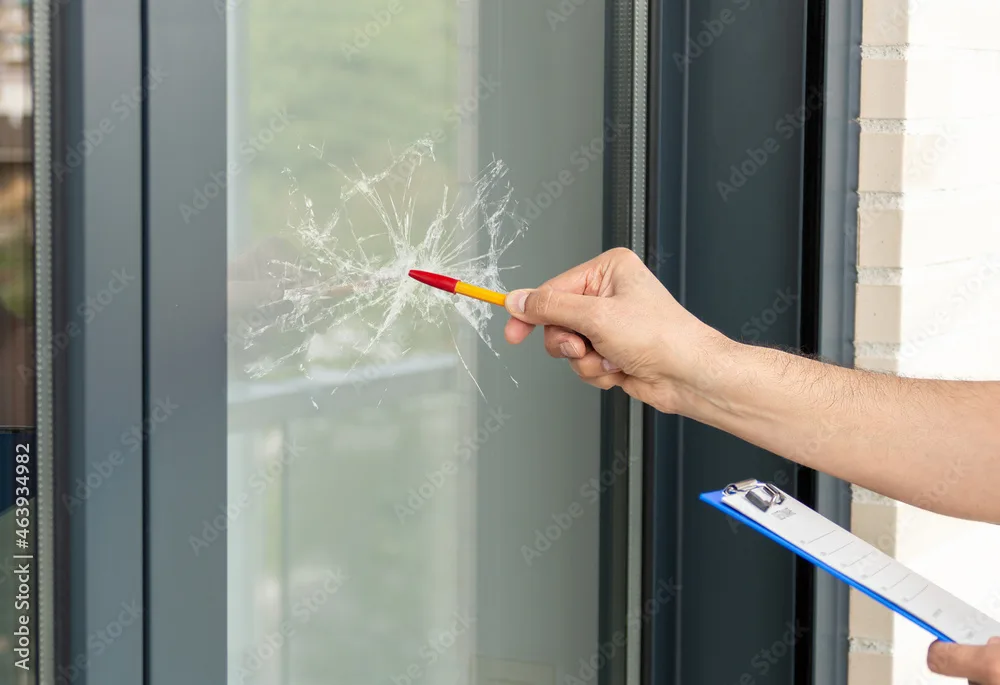
A broken window can leave sharp glass and an exposed opening. During severe weather, move away from windows and follow local warnings. Do not approach unstable glazing or try to break out the remaining glass. The National Weather Service’s tornado guidance explains where to shelter during a warning.
After the weather has passed
Keep children and pets away from the damaged area. From a safe position, photograph the opening, frame, trim, and visible water entry. Note the time of the event and which side of the home was affected. Have unstable glass and temporary protection handled by someone equipped for the work.
Report and document the loss
Contact your insurer promptly if reporting a claim. Ask about required documentation and reasonable temporary measures, and retain receipts. Coverage and reimbursement depend on the policy and claim decision; do not assume that all window damage requires or qualifies for a full replacement.
Compare the repair options
Ask whether the damaged component can be repaired or whether the window assembly needs replacement. The scope should distinguish glass, sash, frame, flashing, surrounding trim, and any concealed damage found during the work. Verify the exact replacement product and installation approach.
Choose performance by specification
A “storm window” label does not establish impact resistance. Ask for the exact product’s tested ratings and written warranty. Discuss requirements for your home instead of assuming that film, shutters, or a new window will prevent all future damage. Review window replacement options or arrange an exterior inspection.